

If you think there may be damp or mould in your council home, see Preventing damp and mould for advice.
Contents
- Background and coverage
- Introduction
- Key principles of the Damp and Mould Policy
- Damp and mould trends and locations
- Causes of damp and mould
- Areas of responsibility
- Tenants' responsibilities
- Support available to help residents:
- Oxford City Council housing responsibilities
- Training
- Preventative work
- Reactive work
- Value for money
- Appendix 1 - Legislation and regulations
- Appendix 2 - Oxford City Council guidance, procedures and policies
- Appendix 3 - Oxford City Council objectives
Background and coverage
Introduction
1.1. Studies show that between 10% and 50% of all homes in the UK are affected by damp and mould (The Burden of Respiratory Disease from Formaldehyde, Damp and Mould in English Housing - UK Health Security Agency).
1.2. People living in social housing and low-income communities often experience a higher proportion of dampness and mould than the national average. High energy costs and relatively low incomes can prevent the adequate heating of many homes during winter (fuel poverty), leading to increased condensation and mould. In addition, there is a lack of knowledge of how damp and mould is created in a home, and how to reduce the likelihood of it occurring. This can be related to the building type, structure and age.
1.3. Damp and mould can cause the following issues:
- exposure to indoor mould has been linked with increased upper respiratory tract symptoms, including coughing and wheezing in otherwise healthy people (Understanding and addressing the health risks of damp and mould in the home - GOV.UK)
- underlining the profound health implications of damp and mould
- damp indoor environments elevate dust mites; dust mites affect allergies and asthma
- studies have shown that dampness and mould are associated with approximately 30-50% increases in respiratory and asthma-related health outcomes (Health effects associated with dampness and mould - WHO Guidelines for Indoor Air Quality - NCBI Bookshelf)
- people living in homes with dampness and mould may also experience depression and anxiety due to the conditions
1.4. Damp and mould-related health outcomes affect people regardless of age or current health, but the elderly and children are most at risk and with people with pre-existing respiratory conditions.
1.5. Poor housing conditions result in children frequently being absent from school due to ill health, underachievement, and lower earning power (Press release: Poor housing is a major barrier to school attendance for young people in England).
Key principles of the Damp and Mould Policy
2.1. The key principles of the Damp and Mould Policy are:
- to ensure we provide and maintain dry, warm, healthy homes for our residents in compliance with the Decent Homes Standard
- to ensure that the fabric of our properties is protected from deterioration and damage resulting from dampness and mould
2.2. The Council will achieve these aims by:
- addressing damp issues within residents' homes quickly and professionally by identifying and acting to eliminate the root cause
- publicising the damp remediation work that we can do
- informing residents about the changes they can make to reduce condensation and provide advice and guidance in reducing condensation build up in the home such as opening windows when cooking or showering, using extractor fans, and not drying clothes indoors
- informing residents and staff about the health risks of living in damp and/or mouldy homes to be supplied in different languages and in braille
2.3. Training staff and our contracting partners to:
- our training will focus on spotting signs of condensation, dampness, and mould, understanding the causes and remedies, and carrying out maintenance to reduce the occurrence of dampness and mould. This will include ongoing support and guidance
- carry out maintenance to reduce the occurrence of dampness and mould and to identify and eliminate the root cause
- knowing our stock and the archetypes of properties likely to suffer from wetness and mould. Understanding the components in our properties that may cause dampness is essential
- investing in both preventative and reactive measures
- planning resources, i.e., to respond to higher demand in winter
- ensure appropriate budget levels are assigned to reduce the cause of dampness and moulding
- we will provide our officers with the correct equipment to assess damp in properties and find a resolution to the problem
- complying with all statutory and regulatory requirements and with best practices relating to the provision of this service
- treating residents non-discriminatively under the Equality Act 2010
2.4. We actively engage with other Social Housing Landlords, Environmental Health, and energy Advice agencies to ensure we learn from good practice and contribute to the collective effort against damp and mould.
2.5. We will regularly seek best practices from organisations that deliver damp and mould services. For example, we may learn about innovative ventilation systems, insulation methods, or successful community engagement strategies, and adopt any that will help us tackle the issue.
Damp and mould trends and locations
3.1. Damp and mould can have severe impacts on residents’ health, particularly children, the elderly, the infirm and those with respiratory conditions like asthma, COPD, lung disease or pulmonary hypertension.
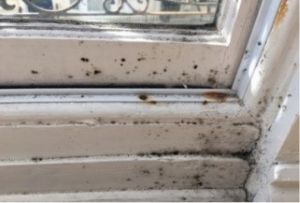
3.2. Damp is the build-up of moisture in a property which affects building structure such as walls, floors and ceilings and can lead to the growth of mould and other microorganisms. Mould spores are released into the air in an effort to continue to spread and grow as with all living things. It is the spores that create respiratory issues.
3.3. Mould is a type of fungus which grows in moist environments and can cause adverse health effects as well as damage to buildings.
Causes of damp and mould
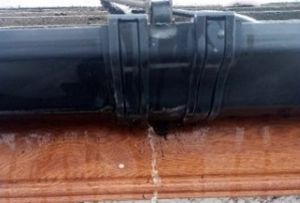
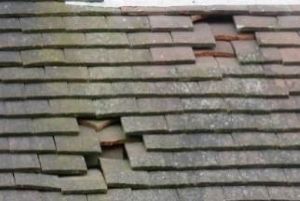
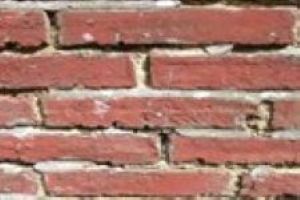
3.4. Penetrating damp: Caused by water coming through the external structure of the building due to damage, age, or defects in design. Examples may include:
- broken pointing to external walls
- old or damaged roof coverings
- broken or blocked gutters, downpipes, or external wastewater systems
3.5. Rising damp: Ground moisture or underground leaks rising through floors and walls into the property’s structure.
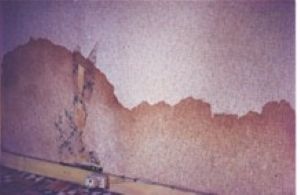
3.6. Leaks: From internal pipes in the kitchen, bathroom, heating and drainage.
3.7. Condensation: Water vapour in the air meeting a colder surface and turning into water droplets. Most common in homes where heating is only occasionally used, or the home is not ventilated enough.
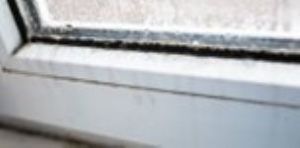
3.8. The risk of condensation can be increased by:
- insufficient ventilation from not opening windows, doors or trickle vents or not operating mechanical extraction in bathrooms and kitchens
- the most common cause is humidity caused by showering, cooking and drying clothes in areas where the moisture cannot escape
- inadequate heating or draught proofing, undersized boilers or radiators
- inadequate insulation such as missing or defective wall and loft insulation
- high humidity due to the presence of rising and penetrating damp
- poor building design and construction in older buildings that predate building regulations and cold bridging
- overcrowding - too many occupants in a property designed for fewer people
3.9. Conditions which can lead to condensation are:
- poor ventilation such as a lack of vents installed, not opening windows or doors regularly or when needed, blocking vents, not turning on extractor fans when washing or cooking or extractors fans being absent from a property or not working, not enough space for air to circulate around furniture
- insufficient heating which could be the result of fuel poverty
- defective insulation such as dislodged insulation in lofts or incorrectly installed insulation. The Council has ensured that such problems have, to date, not occurred within its housing stock
- high humidity caused by penetrating damp or lack of ventilation which can become worse when steam is being created such as, for example, during washing or cooking
3.10. The most common causes of damp and mould in properties are:
Cold bridging
3.11. This can occur in many areas, including difficult to insulate loft areas, raking eaves, concrete mullions and lintels, cavity wall insulation failing over time, and many others.
Blocked vents
3.12. On many occasions, ventilation is provided, either mechanical or background ventilation, which is blocked off, broken, or covered.
Type and location of radiators
3.13. Heating systems are not always up to the performance standard to prevent condensation. Far too often, radiators are located on the internal walls, creating colder external walls, and may be undersized for the room volume.
3.14. No extractor fans in kitchens, bathrooms, and utility rooms. Unvented and condensing tumble dryers.
3.15. These produce a significant amount of water vapour in the space, encouraging condensation.
Bridging damp
3.16. There are many cases of bridging dampness from render systems going below the damp proof course to ground level, concrete paving and ground levels being increased, and entrance canopy roofs and wall tie snots not cleared.
Leaking/insufficient guttering
3.17. There are many cases of guttering overflowing, leaking joints, a lack of maintenance for clearing gutters, and, in some cases, particularly outbuildings without guttering.
Lack of pointing on brickwork
3.18. For various reasons, parts of brick walls have poor or broken-away points, which may have created cold spots for condensation and opportunities for penetrating dampness.
Penetrating damp from render systems
3.19. This could be because they have exceeded their lifespan, and the mix is too dense.
Tenant and residents
3.20. Lack of adequate ventilation is the primary cause, but drying clothes on radiators, cooking with lids off pans, and even tropical fish tanks all add to the moisture levels within a property.
Fuel poverty
3.21. It is recognised that fuel poverty is becoming a significant factor in the increase in damp and mould problems.
3.22. Residents who cannot afford to heat their homes effectively or evenly, which creates conditions for mould to thrive. This should be referred to the tenant management officers for financial advice and signposting to relevant sources of help for residents.
Areas of responsibility
Tenants' responsibilities
4.1. Condensation can cause mould, which can adversely affect health and property. Tenants are to work with the Council for any inspection or remedial works within a reasonable time frame when combatting issues with damp and mould.
4.2. Condensation is caused by:
- humidity of indoor air unable to escape
- low temperature
- no air flow
- cold surface meets warm surface creating water droplets (condensation)
Poor ventilation
4.3. Mould caused by condensation is usually black and typically grows in bathrooms, kitchens, and bedrooms. This is because steam is created in bathrooms and kitchens and we exhale warm humid air when we sleep, none of which is able to escape.
Support available to help residents
5.1. Advice about how to prevent or reduce condensation is available in our document "Preventing damp in your home," which is available via the website:
Residents can contact the Council’s call centre for assistance: Speak to customer services.
Tenants can also use the online service: Report a housing repair.
The Council’s surveyors will also provide first-hand help and advice with the occupants, on inspecting the property.
5.2. As of 1 September 2025 when reporting damp and mould, tenants will be invited to send images to the Council. This will form part of the triage process at the point of reporting. The images would be used to assess prior to visiting the property and also to identify if the severity is higher than described. The Council will investigate whether images could be uploaded via the tenants’ portal.
Oxford City Council housing responsibilities
6.1. The Council is responsible for insulating homes according to the Decent Homes Standard as applied in England to help reduce the likelihood of condensation occurring.
6.2. We are responsible for maintaining homes to avoid penetrating and rising dampness or for carrying out remedial action if these do occur.
6.3. The Council’s Damp and Mould team will communicate with the tenant on three occasions. If no contact is made then it will be referred to the Tenant Management Officers to support the Damp and Mould team with access arrangements.
6.4. Penetrating and rising damp is typically misdiagnosed, but can sometimes be caused by:
- lateral rain penetration
- condensation or entrapped moisture
- high ground levels
- bridging of the damp proof course
- defective rainwater goods
- salt contamination (hygroscopic salts can absorb moisture from the air and cause staining)
- water leaks from windows, roof, overflow pipes, gutters or drainpipes, and internal plumbing
- defective or non-existent damp proof course
- inadequate cleaning and drying after major leaks, bursts, or floods
6.5. Penetrating or rising damp usually leaves a tide mark.
Training
7.1. The Council will ensure that all staff and contractors have the training to raise awareness and create a good understanding of this policy.
7.2. The Council will ensure that all our staff and other relevant Oxford City Council Housing staff have the training to raise awareness of and create a good understanding of damp and mould issues, related issues (i.e., health), causes and measures to combat these.
Preventative work
8.1. To reduce the occurrence of condensation, dampness, and mould in our homes, we will:
- promote information about how to reduce condensation. We will supply each household visited for reported issues of damp and mould with an information leaflet on dealing and reducing damp and mould. We comply with the Equality Act 2010 and make reasonable adjustments for residents with disabilities or communication needs – including providing information in large print, braille, or alternative languages (offering home visits or extended appointment times as required). This information will be provided in a number of languages and braille
- identify a list of components most likely to cause damp
- the Council will commission contractors to monitor these items. When officers conduct repair visits, the Council will arrange to replace any components whose condition has deteriorated and may result in dampness
- highlight any areas of concern during each stock condition survey
- carry out work to fix any problems that are found and introducing newer methods of improving air flow and reducing cold areas by fitting better extractor fans, PIV units and improving thermal quality where required
- tackle fuel poverty through advice services that are signposted by the Council. It includes replacing inefficient heating with traditional or renewable heating, insulation programmes, and whole property ‘retrofit works’, which address all areas that affect a property's warmth
- investigate the possibility of providing secure drying areas in communal flat blocks to reduce the need to dry washing on radiators or inside flats. Tenant Management Officers can be contacted by residents if humidifiers are required
8.2. We aim to conduct a stock condition survey for each property at least every 5 years.
8.3. We will ensure our planned maintenance work addresses fuel poverty issues by increasing properties’ energy efficiency after 6 weeks as mould will grow back in 4 weeks if it reoccurs.
8.4. All maintenance teams are to follow the Damp and Mould Policy to prevent wetness and mould by tackling issues when involved with work on the property.
Reactive work
9.1. When residents contact the Council if there is damp and mould the Council will:
- investigate any potential emergency hazards and, if the investigation confirms emergency hazards, undertake relevant safety work as soon as reasonably practicable, both within 24 hours of becoming aware of them
- investigate any potential significant hazards within 10 working days of becoming aware of them
- produce a written summary of investigation findings and provide this to the named tenant within 3 working days of the conclusion of the investigation
- undertake relevant safety work within 5 working days of the investigation concluding, if the investigation identifies a significant hazard
- begin, or take steps to begin, any further required works within working 5 days of the investigation concluding, if the investigation identifies a significant or emergency hazard. If steps cannot be taken to begin work in working 5 days this must be done as soon as possible, and work must be physically started within 12 weeks
- when mould is reported, we will send a technician to perform a mould wash down will be undertaken 5 working days of the report being made to the Council
- when you report a problem, please complete a property and diagnostics questionnaire by telephone to ensure we have enough information and can keep records
- if the outcome shows that condensation is likely to be causing the problem, we will discuss how residents can make changes to improve the situation
- if the outcome shows that dampness is likely to be present in the home, we will fix the problem and advise residents on resolving it if it is not a problem with the building
- carry out a damp and mould survey, which reviews things like heating, pipes, rainwater goods, damp proof course and loft insulation where the problem is not easy to identify
- conduct a damp and mould survey, inspecting cavity wall insulation and thermal imaging. Take damp and humidity measurements. Conduct an underground survey via CCTV on any potential cracked drainage areas if appropriate. We initially do a visual check which is normally adequate, and then instruct the contractor to do more intrusive investigation if the cause is less easy to spot
- we will evaluate the survey results within 48 hours to establish the cause of the problem and advise residents of the remedial action we will take, steps they should take, and any further work required in the future, together with a timeframe for this
- secure the provision of suitable alternative accommodation for the household, at the Council’s expense, if relevant safety work cannot be completed within 24 hours and the damp and mould is an emergency hazard
- provide a damp and mould leaflet during each visit arranged in connection with these issues
9.2. All cases of damp and mould will be assessed using the Housing Health and Safety Rating System (HHSRS). Any hazard determined to be Category 1 or a significant/emergency hazard requiring urgent action, will be addressed in line with Awaab’s Law timeframes. We will triage cases of damp and mould based on the following priorities:
- High: Traumatic water leakage likely to pose an Immediate and significant risk to the building structure or harm to the occupants, extensive mould growth in multiple commonly used rooms (bedroom/living room). The presence of vulnerable residents living in the affected property and mould could cause a potential significant health risk. The response of remedial action in these instances is within 24 hours of the report of the damp and mould having been made. The initial visit would be to remove any potential health risks immediately and make safe and consider the need for the occupants to be decanted whilst further works are addressed, if the mould cannot be removed instantly and the home made safe.
- Medium: Multiple areas of extensive condensation and mould growth in rooms. This would represent a moderate and significant health risk to the occupants. Response of inspection investigation will be 10 days and remedial work and commence within 5 working days of the investigation report of damp and mould having been made. Remedial work should commence within 5 days of inspection and should be completed within 12 weeks.
- Low: Areas of mould growth limited in coverage and location such as in cupboards, corners of rooms and around windows. This would not be deemed as holding a significant risk to the occupants but as a rule we would try to respond as follows: Response of inspection within 14 working days and remedial work within 14 working days or reasonable timeframe of inspection the report of damp and mould having been made. Remedial work should be completed within 12 weeks or within a reasonable timeframe
9.3. The triage process will ensure residents with vulnerabilities receive urgent attention whatever the state of damp and mould in the property which can be defined as:
- people with pre-existing health conditions such as allergies, asthma, COPD, cystic fibrosis, other lung and cardiovascular diseases
- people with weakened immune systems, people who have had a transplant or residents taking medication which suppress the immune system
- people with end-of-life conditions
- residents living with a mental health condition
- children and young people
- older people
- residents who are bedbound, housebound or have mobility problems
9.4. There will be four types of investigations for this triage process to take place:
- standard investigations
- renewed investigations
- further investigations
- emergency investigations
i) Standard investigations
The Council will conduct a standard investigation within 10 working days of becoming aware of a potential hazard. This must confirm whether or not there is a significant or emergency hazard and must also, if possible, identify the required work to make a property safe and prevent the hazard from recurring. Day one of the 10 working days timeline is the day after the landlord becomes aware of the potential hazard.
Standard investigations can be conducted remotely unless the named tenant specifically requests an in-person investigation. If a tenant later reports a material change relating to the hazard, or the Council becomes aware of a material change through other routes it must investigate again to the same timeframes. A material change could include a change to the severity of the hazard or a change to the effect it is having on the tenant’s health. For example, if a tenant reports new symptoms or worsening symptoms that may be associated with the hazard, or if they report that the hazard has worsened since the time of investigating.
If during a standard investigation the Council has reasonable grounds to believe there is an emergency hazard, then the Council will complete the investigation as an emergency investigation. Emergency timeframes will start from the point at which the potential for an emergency hazard is uncovered
ii) Renewed investigations
If a tenant specifically requests an in-person inspection after an investigation has been done remotely, a ‘renewed’ in-person investigation must be carried out. For potential significant hazards, the Council will complete the renewed investigation within 10 working days of the request.
For potential emergency hazards, the tenant may request an in-person investigation within 10 working days if an initial remote investigation concludes there is not an emergency hazard or if the initial investigation finds an emergency hazard but does not identify any relevant safety work to address the emergency hazard.
iii) Emergency investigations
Emergency investigations are required if the Council has reasonable grounds to believe that there is an emergency hazard affecting the home. The investigation must confirm whether or not there is a significant or emergency hazard and must also, if possible, identify the required work to make a property safe and prevent the hazard from recurring. In these circumstances the Council will investigate within 24 hours of the Council forming that belief.
If, during a standard or renewed investigation, the Council believes that there may be an emergency hazard, the emergency action requirements begin to apply, and the investigation must be completed as an emergency investigation within 24 hours of the completion of the investigation that identified the emergency hazard.
iv) Further investigations
There may be circumstances where the standard, emergency or renewed investigation is unable to determine the extent of, or underlying cause of, a significant or emergency hazard. In this circumstance a further investigation must be completed as soon as reasonably practicable to determine what work is required to make the property safe and prevent the hazard from reoccurring.
For example, if a property is affected by a damp and mould hazard, the standard investigation may conclude that a structural survey is needed to diagnose the underlying cause of damp. The Council will undertake relevant safety work while further investigations are underway, such as providing a dehumidifier and specialist mould wash.
The further investigation must include an in-person inspection if the tenant so requests it (and an in-person inspection has not already been carried out).
If an investigation has identified relevant safety work, the Council will undertake the relevant safety work within 5 working days of the investigation that concludes there is a significant hazard or 24 hours of an investigation that concludes there is an emergency hazard, even if a further investigation is pending.
9.5. Affected residents are to be kept up to date with the progress of damp and mould works and the outcome of inspections. A written report on what was found, what the risks are to the occupants, what needs to be done and when it will be done will be sent to the residents within 3 working days of the inspection. Following the inspection, the Council or the contractor will contact the affected residents to convey the action which needs to be taken and how long the work will take.
9.6. Data loggers are to be installed in properties where surveyors deem it necessary where there is evidence of surface condensation and mould not caused by a building related effect
9.7. The Council will supply AICO homelink systems where surveyors deem necessary for monitoring levels of humidity heat and cold in properties that have persistent mould growth. This will also provide residents with the information to help keep the property mould free.
9.8. In addition to providing advice and support to eradicate damp and mould where residents are experiencing difficulties paying energy bills then, with the residents’ permission, the residents will be passed to appropriate debt advice support services.
9.9. The Council will adopt a lessons learned exercise from each damp and mould case which will be considered at the regular meetings between the Council and the contractor when we will also involve tenant representatives in reviewing this policy and monitoring performance, This will include an annual summary of damp and mould reports, response times, and outcomes be shared via consultation groups which will be published on our website to ensure transparency and accountability
9.10. In carrying out investigations and remedial actions, we comply with the Equality Act 2010 and make reasonable adjustments as set out in 8.1 above)
Value for money
10.1. Fixing damp and mould once they have taken hold of a property can be extremely costly. By enhancing stock condition surveys to include a complete property surveys and monitoring any potential causes of dampness and mould during day-to-day visits, the cost to Property Services and Oxford City Council Housing should be reduced:
- Complete property surveys may also reduce reactive repairs unrelated to damp and mould issues.
- Oxford City Council Housing could have a financial implication because the Council may accrue more repair items that residents may not be aware of.
- The cost of other public services, such as health services, will be reduced by improving living conditions
Appendix 1 - Legislation and regulations
- Housing Act 2004 (Part 1 - HHSRS)
- Landlord and Tenant Act 1985
- The Homes (Fitness for Human Habitation) Act 2018
- Environmental Protection Act 1990
- Decent Homes Standard
- The Equality Act 2010
- The Care Act 2014
- Social Housing and Regulation Act 2023 (Awaab’s Law)
- Defective Premises Act 1972
- Health and Safety at Work Act 1974
- Secure Tenants of Local Housing Authorities (Right to Repair) (Amendment) Regulations 1994
- Housing Act 2004
- The Regulatory Reform (Fire Safety) Order 2005
- Decent Homes Standard 2006
- Building Regulations 2010
- The Control of Asbestos Regulations 2012
- The Construction (Design and Management) Regulations 2015
- Homes (Fitness for Human Habitation) Act 2018
- The Building Safety Act 2022
- The Building (Higher-Risk Buildings Procedures) (England) Regulations 2023
- Regulator of Social Housing – Safety and Quality Standard 2024
Appendix 2 - Oxford City Council guidance, procedures and policies
- Oxford City Council Safeguarding Policy
- Oxford City Council Equality, Diversity and Inclusion Strategy
This Policy supports objectives detailed in the Oxford City Council Strategy 2024-2028:
Appendix 3 - Oxford City Council objectives
This Policy supports objectives detailed in the Oxford City Council Strategy 2024-2028:
- Housing, Homelessness and Rough Sleeping Strategy 2023 to 2028
- Meet the Housing Needs of Vulnerable Groups
- Support Sustainable Communities
- Good Quality Homes For All
- Thriving Communities


